
Compound Interest Explained (With Real Examples)
Compound interest is often called the eighth wonder of the world for a reason. Here's a clear explanation of how it actually works, with real numbers.
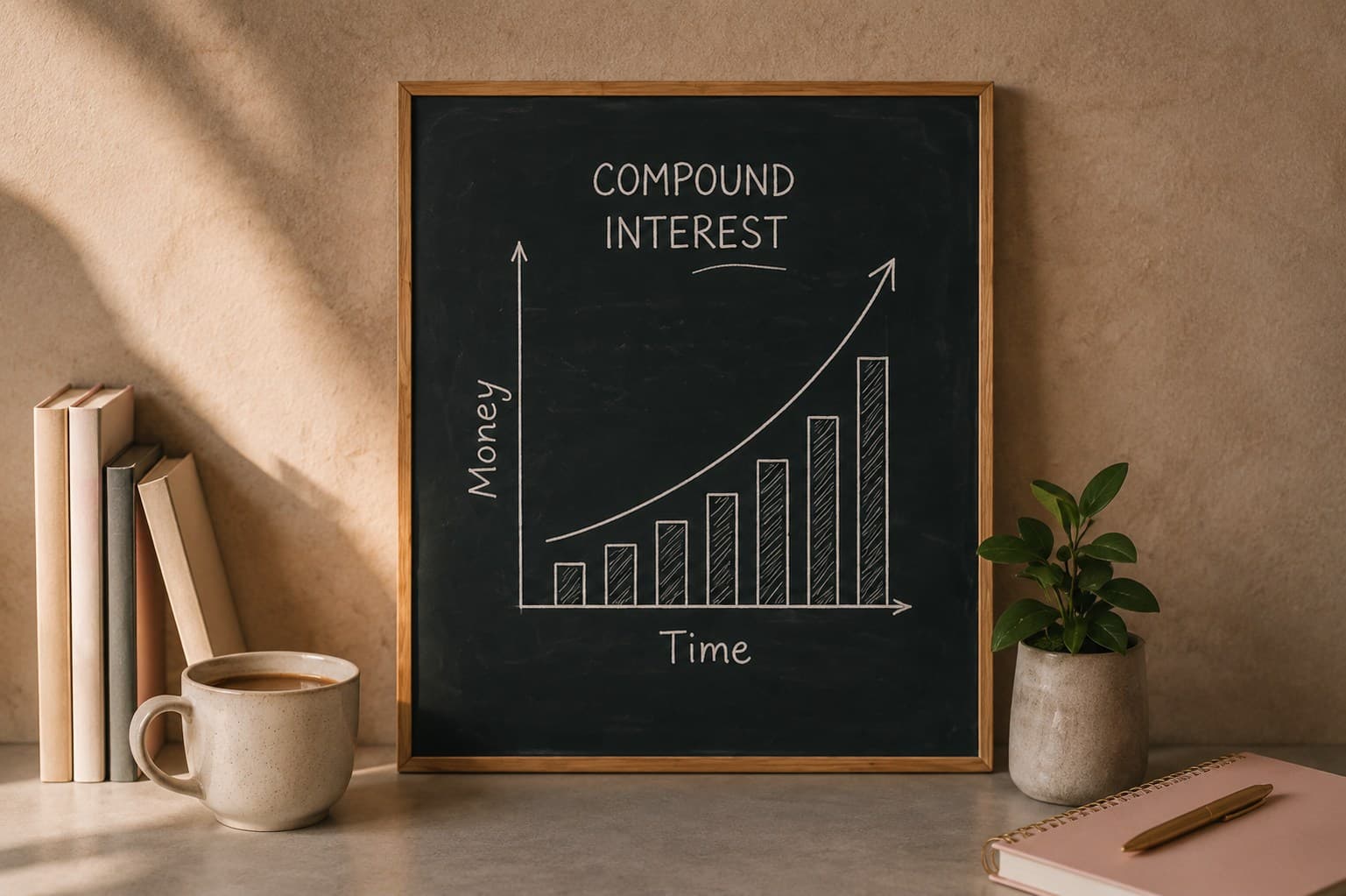
Compound interest is one of the few genuinely powerful forces in personal finance, and it works quietly in the background, which is exactly why its impact is so easy to underestimate.
Compound interest means you earn returns not just on your original investment, but on the returns it has already generated, so growth accelerates over time instead of staying flat. The earlier you start, the more time compounding has to work in your favour.
The basic idea
Imagine you invest £1,000 and it grows by 7% in a year. You now have £1,070. The next year, that 7% growth applies to the full £1,070, not just your original £1,000, so you earn £74.90, not £70. It seems small at first, but repeated year after year, this effect builds on itself dramatically.
Why time matters more than most people expect
Compound interest rewards time more than almost any other factor. Someone who starts investing earlier, even with smaller amounts, frequently ends up ahead of someone who starts later with larger contributions, purely because their money has had more time to compound.
Example
Investor A invests £200 a month starting at age 25 and stops contributing at 35 (10 years, then leaves it untouched). Investor B invests £200 a month starting at age 35 and continues until 65 (30 years). Assuming a 7% average annual return, Investor A, who contributed for a decade and then stopped, can end up with a similar or even larger final amount than Investor B, who contributed for three times as long, purely because Investor A's money had more total years to compound.
A simple table showing the effect
| Monthly contribution | Years invested | Approximate value at 7% average annual return |
|---|---|---|
| £200 | 10 years | ~£35,000 |
| £200 | 20 years | ~£105,000 |
| £200 | 30 years | ~£245,000 |
These figures are illustrative estimates, not guarantees, real returns vary year to year. The pattern that matters is the shape: growth accelerates, it doesn't stay flat.
Compound interest can work against you too
The same mechanism that builds wealth in investing can build debt on high-interest borrowing, particularly credit cards. If interest isn't paid off, it gets added to the balance, and future interest is then charged on that larger amount, which is exactly why credit card debt can spiral so quickly if only minimum payments are made.
How to make compound interest work in your favour
- Start as early as you reasonably can, even with small amounts.
- Contribute consistently, rather than waiting for a "better" time to start.
- Leave the money invested rather than withdrawing and restarting, which resets the compounding clock.
- Reinvest any dividends or returns rather than withdrawing them, so they continue compounding alongside your original contributions.
Common mistakes
- Waiting to "invest more later" instead of starting small now. The lost time is often more costly than the smaller starting amount.
- Withdrawing and reinvesting repeatedly. This interrupts compounding and resets progress.
- Underestimating how it works against you in debt. High-interest debt deserves urgent attention for exactly the same reason compounding is powerful for investing.
Key takeaways
- Compound interest means your returns generate their own returns over time, accelerating growth.
- Time invested tends to matter more than the exact amount contributed.
- The same mechanism can work against you through high-interest debt.
- Starting early and staying consistent is more effective than waiting for a "better" moment.
With the mechanics of investing and compounding in place, it's worth zooming out to the bigger picture: what financial independence actually means, and how these pieces fit together over the long term.
The Personal Finance Guide
The complete, step-by-step system for understanding your money.
A calm, step-by-step walkthrough of exactly how to organise your money, from your first budget to your first investment, explained simply and without the jargon.
Related articles

Investing for Complete Beginners: How to Start With Confidence
Never invested before? Here's a clear, plain-English introduction to what investing actually is, why it matters, and exactly how to take your first step.
Stocks vs ETFs vs Index Funds: What's the Difference?
Stocks, ETFs and index funds get used interchangeably, but they're not the same thing. Here's a clear breakdown of each, and how they usually work together.

What Financial Independence Actually Means (And How to Get There)
Financial independence isn't one magic number or an early retirement fantasy. Here's what it actually means, and a realistic path toward it.